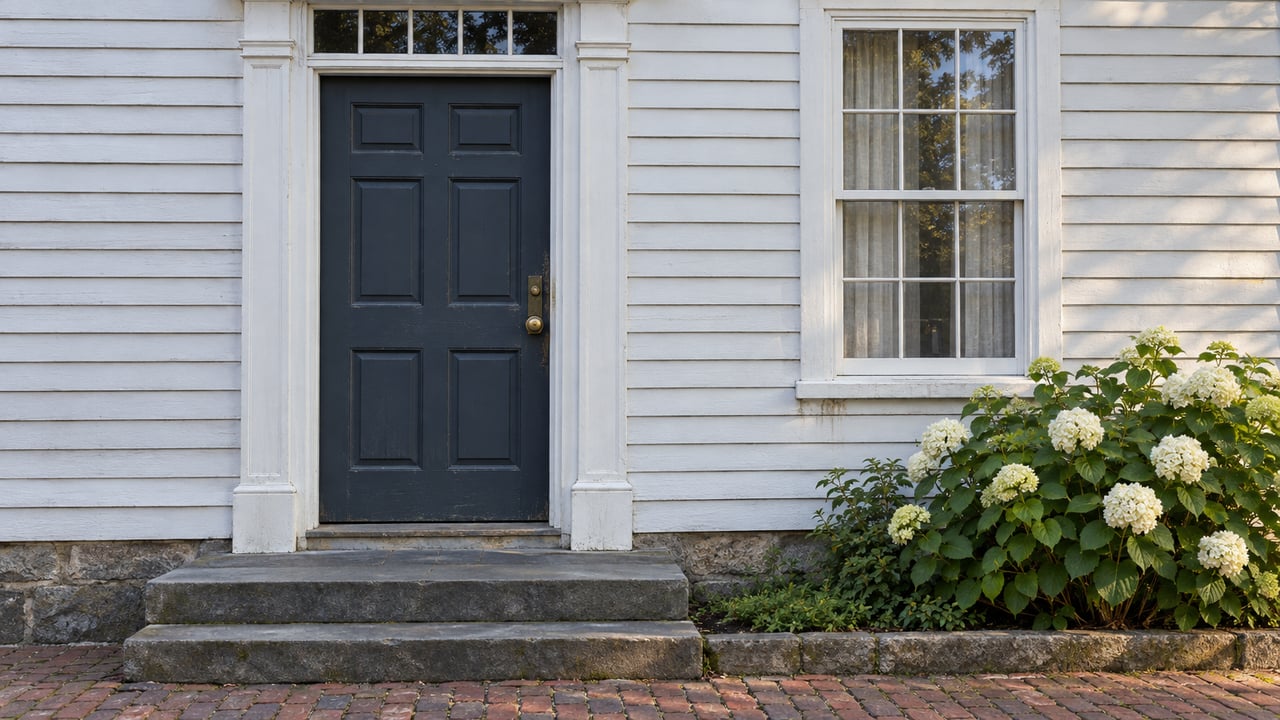
What a Historic District Approval Actually Promises a Portsmouth Buyer
October 1, 2026
October 1, 2026
Portsmouth's Historic District Commission reviews exterior changes to buildings across four named areas identified in the city's historic district overview: the North End and Christian Shore around North Mill Pond, the South End, and the West End, which took in the Islington Street corridor's 19th-century industrial buildings when it joined the district in 2010. An HDC approval belongs in a property's renovation history. The commission's 2026 case record shows why buyers and sellers should check whether an approval remains active.
That distinction matters most to two kinds of buyers: someone purchasing a historic property with a renovation plan already attached to the listing, and someone selling one with a permit they assume is still good. Whether an approved plan remains buildable can matter to both groups.
The commission runs two separate review paths. The August 5, 2026 agenda included administrative approvals for projects at addresses including 394 Pleasant Street and a unit on High Street, alongside a full slate of public hearing items on the same night. The commission meets the first Wednesday of the month and adds a second Wednesday only when the docket runs long, according to the city's HDC page.
Which track a project lands on isn't always obvious from the scope of the work.
A project at 112 Mechanic Street asked for something that sounds almost administrative on its face: replacing a faux door with a real one. It didn't go through the fast track. It appeared as old business on the May 6, 2026 public hearing agenda, and, according to the June 3, 2026 agenda, it had been withdrawn by the applicant rather than resolved. A door swap, the kind of change a buyer might assume takes a form and a signature, instead consumed multiple meeting cycles before the petition was pulled.
Scope alone doesn't determine how long a review takes.
A public comment letter filed for the properties at 445 Marcy and 20 Pray Street documents a request to revisit an administrative approval. Abutters wrote to the commission asking that a proposal be pulled out of administrative approval and sent through the full process, arguing the application depended on resolving "conflicting factual narratives between neighbors." The letter was filed in August 2026.
The same letter notes that an earlier design for the site, one that had already gone through extensive commission discussion, was allowed to lapse when the developer let the lot sit for over a year before returning with a new proposal.
A petition to reconstruct a rear ell and replace vinyl siding, shutters, and trim with wood at 44 Rogers Street appears in the May 2026 old business agenda and again as a fresh public hearing item on the June 2026 legal notice. A project that reads, on paper, like routine maintenance, trim and siding, not new footprint, carried across at least two monthly meeting cycles before resolution.
The city's own building inspection FAQ is blunt about why:
"So plan ahead, it adds at least an extra month to the review process!"
That's the baseline. It assumes no continuance, no neighbor objection, no revision. The Rogers Street timeline shows what happens when even one of those variables shows up.
Larger projects don't just take longer. A petition to demolish an existing single-family home at 58 Humphrey's Court and replace it with a multi-family dwelling had a site walk scheduled ahead of the regular June 2026 meeting, with commissioners walking the property in person before the hearing began, according to the June 3, 2026 agenda.
One Market Square LLC returned to the commission in 2026 seeking changes to a design the commission had already approved, lowered site grade, a new rear dormer, new courtyard windows, and roof adjustments. Approval isn't a single event that closes out a property's file.
If a historic Portsmouth property comes with an existing design, whether it's a full addition or something as small as a door replacement, the plan on paper isn't the same as a plan that's still valid. Worth confirming before an offer is contingent on it:
For sellers, the practical version of this is checking the approval's status. A permit or design approval attached to a listing is only worth what it says it's worth if it's still active. A lapsed approval isn't a selling point.
The North End and Christian Shore sit along North Mill Pond and carry some of the city's older wood-frame residential stock. The South End holds much of Portsmouth's most recognized Federal and Italianate architecture. The West End, added to the historic district in 2010, covers 19th-century industrial buildings along the Islington Street corridor, a mix of commercial and residential structures that reads differently from the older waterfront neighborhoods but falls under the same review requirements. A property's location inside or just outside these boundaries determines whether any of this applies at all, and that boundary isn't always visible from the street.
None of this makes historic Portsmouth a harder place to buy. It makes the paperwork attached to a listing worth reading as closely as the listing itself, since in this district, an approval is a status that can change between the day it's granted and the day someone finally picks up a hammer.
If you're weighing a historic Portsmouth property with renovation plans already in motion, or preparing to list one, Caren Logan Luxury Homes can help you read the file before you write the offer.
This article is general information, not legal, tax or financial advice. Consult a qualified professional about your situation.


Work with a trusted advisor who combines market expertise with a refined, client-first approach to every transaction. With a focus on personalization and detail, each experience is thoughtfully tailored to align with your goals and lifestyle. From first conversation to closing, expect a seamless, elevated process defined by professionalism, care, and results.